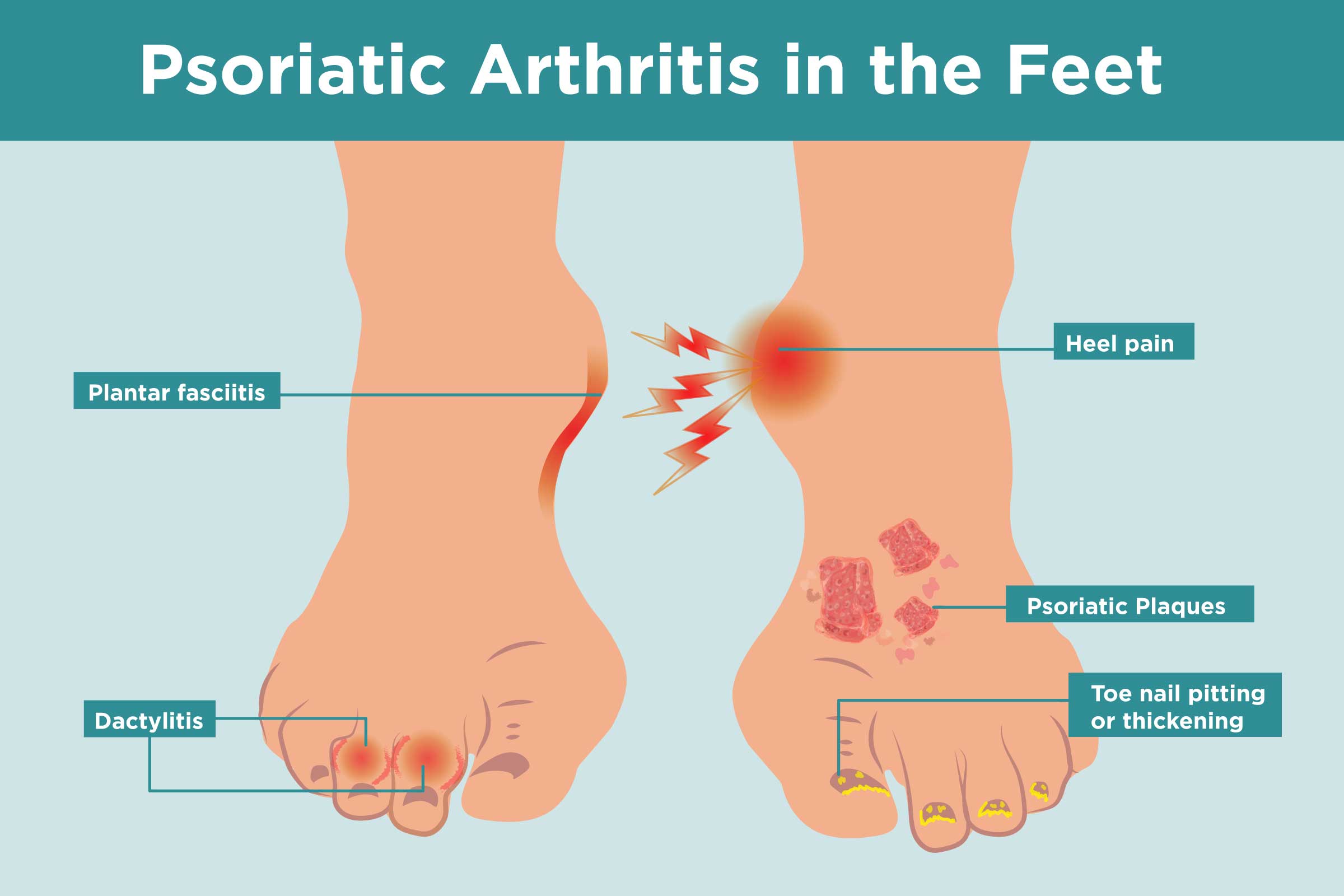
Determining whether a rash on your foot is due to psoriatic arthritis or contact dermatitis can be challenging because psoriatic rashes can mimic other skin conditions. Here are some key points to consider:
Psoriatic Arthritis Rash
- Appearance: Often presents as red, slightly raised patches with silvery scales.
- Common Show Full Answer
Determining whether a rash on your foot is due to psoriatic arthritis or contact dermatitis can be challenging because psoriatic rashes can mimic other skin conditions. Here are some key points to consider:
Psoriatic Arthritis Rash:
- Appearance: Often presents as red, slightly raised patches with silvery scales.
- Common Locations: Elbows, knees, scalp, belly button, and lower back.
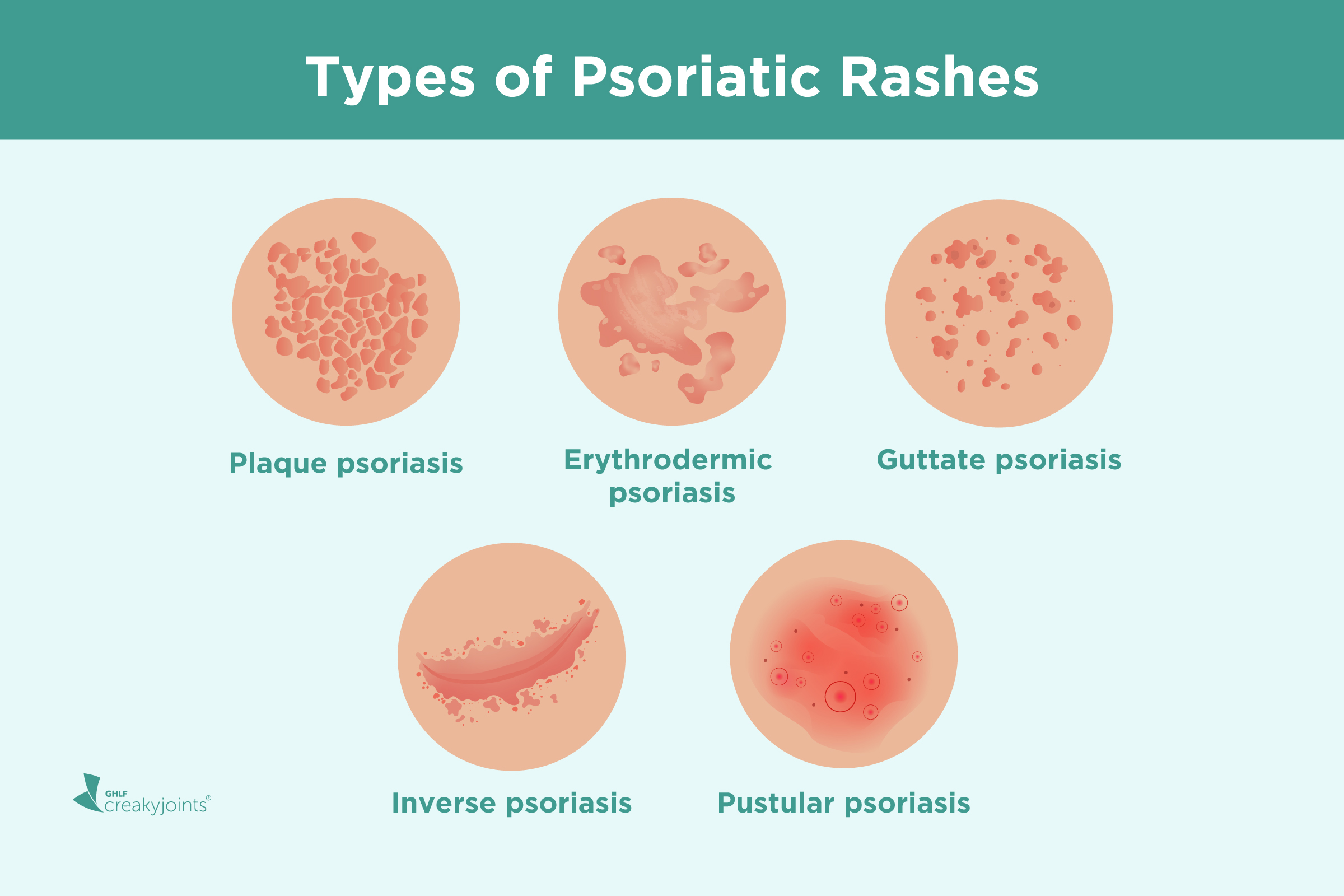
- Types:
- Plaque Psoriasis: Red patches with silvery scales.
- Guttate Psoriasis: Small, tear-dropped dots or lesions.
- Inverse Psoriasis: Flat, red, shiny patches in skin folds.
- Pustular Psoriasis: Small, fluid-filled blisters.
- Erythrodermic Psoriasis: Generalized redness and scaling over a large area.
Contact Dermatitis:
- Appearance: Red, itchy rash that may blister or ooze.
- Common Locations: Areas exposed to an irritant or allergen.
- Symptoms: Itching, redness, and sometimes swelling.
When to See a Doctor:
- If the rash doesn’t go away after a week or two.
- If it gets more red or itchier.
Diagnosis:
- A dermatologist can help diagnose your skin condition and work with your rheumatologist if you have psoriatic arthritis.
For a definitive diagnosis, it's best to consult a healthcare professional.
August 3, 2024





 Continue with Facebook
Continue with Email
Continue with Facebook
Continue with Email

 Join
Join



 Your Privacy Choices